
With a concept of justice in hand, we step back to consider suffering, the bane of our existence as living beings. We have identified our aim, to seek, promote and realize the well-being of living beings. Yet suffering persists, and characterizes much of the human condition. Our understanding of it is an important weapon in our struggle against it. As…
Read More
Value for Wednesday of Week 43 in the season of Assessing
Being Authentic
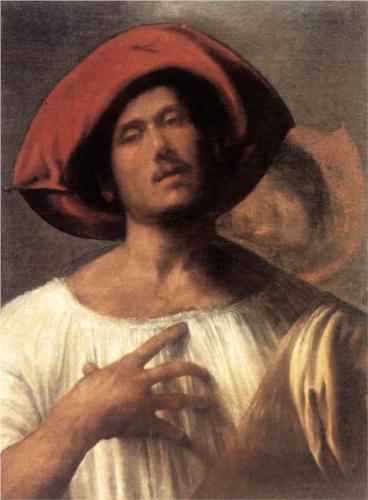
To be our best selves, we must be who we are – we must be authentic.
- What does one person give to another? He gives of himself, the most precious he has. . . . he gives him of that which is alive in him; he gives him of his joy, of his interest, of his understanding, of his knowledge, of his humor, of his sadness — of all expressions and manifestations of that which is alive in him. In thus giving of his life, he enriches the other person, he enhances the other’s sense of aliveness by enhancing his own sense of aliveness. He does not give in order to receive; giving is in itself exquisite joy. But in giving he cannot help bringing something to life in the other person, and this which is brought to life reflects back to him . . . [Erich Fromm]
- To thine own self be true, and it must follow, as the night the day, thou canst not then be false to any man. [William Shakespeare, “Hamlet,” Act I, Scene 3: Lord Polonius to his son Laertes.]
- Let yourself be silently drawn by the stronger pull of what you really love. [Rumi]
- The greatest gift you ever give is your honest self. [Fred Rogers.]
“Authenticity is defined as being true to yourself . . .” “A number of philosophical and psychological theories suggest the true self is an important contributor to well-being.”
There is, of course, a difference between authenticity and stubbornness but no one can express herself fully or make his full contribution to the world except by being authentic. Each of us thinks we see a variety of truths. We may be right or wrong but unless we live according to our vision, we will never know. If we try to act in a way that does not seem right to us, we are not likely to be effective. We may make mistakes but through those mistakes, we can learn.
The same process drives science forward. As theories are tested and their flaws identified, the store of knowledge grows.
Real
True Narratives
Creative people do not necessarily live peaceful or contended lives. Here are some stories of people who walked energetically, if often tumultuously, along their own path.
- Patti Smith, Just Kids (Ecco, 2010), about how the rock star Patti Smith and her love Robert Mapplethorpe set their independent paths, together.
Other narratives on authenticity:
- Jill Soloway, She Wants It: Desire, Power, and Toppling the Patriarchy (Crown Archetype, 2018): “ . . . it’s Soloway’s deeply considered and honestly depicted quest for an authentic self that gives this memoir its depth.”
- Roxane Gay, Hunger: A Memoir of (My) Body (Harper/HarperCollins Publishers, 2017): “At its simplest, it’s a memoir about being fat — Gay’s preferred term — in a hostile, fat-phobic world. At its most symphonic, it’s an intellectually rigorous and deeply moving exploration of the ways in which trauma, stories, desire, language and metaphor shape our experiences and construct our reality.”
- Brian Broome, Punch Me Up to the Gods: A Memoir (Houghton Mifflin Harcourt, 2021): “. . . a coming-of-age story that explores Black manhood and queerness in the Rust Belt”.
- Caster Semenya, The Race to be Myself: A Memoir (W.W. Norton & Company, 2023): “. . . the Olympic runner tells the full story of her gender-based discrimination and dehumanization by the global athletics world.”
- Lucy Sante, I Heard Her Call My Name: A Memoir of Transition (Penguin Press, 2024): “The book presents a life in layered stages. We shift back and forth between present and past. The present has greater impact. We are with Sante as she tries on wigs, joins support groups, finds an endocrinologist and begins to take subcutaneous injections of estrogen. She practices sitting like a woman, to shake off what she thinks of as her lifelong imitation of masculinity.”
Technical and Analytical Readings
Photographs
Documentary and Educational Films
Imaginary
Fictional Narratives
Novels:
- Jeffrey Eugenides, Middlesex: A Novel (Picador, 2002): born a female, Calliope undergoes a sex-change operation and becomes Cal at age fourteen, after discovering a genetic abnormality that resulted in his sexual ambiguity.
- Gregor von Rezzori, An Ermine in Czernopol (New York Review Books, 2012): “Laughter in Czernopol had been elevated to an art form, a folk art of unparalleled authenticity . . .”
- Jeanette Winterson, Oranges Are Not the Only Fruit (Bloomsbury, 1991): reflecting the author’s strict Pentecostal upbringing, the novel tells of a young woman who finds and pursues her own path.
- Jeanette Winterson, The Passion (Atlantic Monthly Press, 1988), a lesbian author’s musings about a lesbian woman’s search for self in Napoleon’s time.
- Sheila Heti, Pure Color: A Novel (Farrar, Straus & Giroux, 2022): “. . . holds within it a taste of something that defies classification. As Heti writes: ‘There is something exciting about a first draft — anarchic, scrappy, full of life, flawed. A first draft has something that a second one has not.’ That something doesn’t always survive into the final product, but it is the artist’s purest self, unadulterated.”
- Jane Pek, The Verifiers: A Novel (Knopf Doubleday Publishing Group, 2022): “Are we surrendering to algorithms that know us better than we know ourselves? Are we trading our freedom of choice, thought, even desire, for convenience and fantasy? Are we becoming unable to tell, or even care, what’s real?”
- Jennifer Egan, The Candy House: A Novel (Scribner, 2022), “takes its title from a repeated metaphor for temptation: the lures of amusement and nostalgia that Hansel-and-Gretel us into a spun-sugar edifice upon which we are invited to gorge and in which we — our desires, our memories — are also on the menu.”
- Kristen Arnett, Stop Me If You’ve Heard This One: A Novel (Riverhead Books, 2025): “Throughout the novel, clowns are framed as a way to explore queer identity and gender expression. Bunko is after all a cowboy and is referred to with male pronouns, though Cherry is a woman and referred to with female pronouns. But the way that clowns are reviled by the public at large is also explicitly compared with the queer experience . . .”
From the dark side:
- T.J. Alexander, A Gentleman’s Gentleman: A Novel (Vintage, 2025): “Christopher Winterthrope, the orphaned Earl of Eden, must marry before his 25th birthday or lose his lands and title. Marriage is a complicated prospect, since Christopher is trans.”
Poetry
From the dark side:
- Edgar Lee Masters, “Amos Sibley”
- Edgar Lee Masters, “George Trimble”
Music: Composers, artists, and major works
In music, adherence to the composer’s intent is a form of authenticity. In addition, a grounding in the music’s idiom also makes performance seem authentic. Adrian Boult was a British conductor whose output was authentic in both ways. Here is a link to his playlists.
Joaquín Rodrigo, Concierto de Aranjuez (1939) (approx. 24-28’) (list of recorded performances): “Its music seems to bring to life the essence of an eighteenth-century court, where aristocratic distinction blends with popular culture. In its melody the perfume of magnolias lingers, the singing of birds and the gushing of fountains.” “In summer, the Aranjuez gardens are beautiful, indeed. But such is the lure of Joaquín Rodrigo’s music that nowadays one cannot walk through its leafy avenues without thinking of the Aranjuez. The composer has mesmerized the world with his wonderful inspiration, and made Aranjuez his very own.” “'It should sound like the hidden breeze that stirs the treetops in the parks, as strong as a butterfly, as dainty as a verónica [a classic pass in bullfighting],' is how the composer described his concerto.” Top recorded performances are by de la Maza (Argenta) in 1948; Yepes (Alonso) in 1969; Bream (Gardiner) in 1974; de Lucia (Colomer) in 1991; Pepe Romero (Marriner) in 1992 ***; Kraft (Ward) in 1992; Barreuco (Domingo) in 1995; Ogden (Fujioka) in 1997; and Gallén (Valdés) in 2001.
Gioachino Rossini, Il Barbieri de Siviglia (The Barber of Seville) (1816) (approx. 141-175’) (libretto) (list of recorded performances) “is one of the more purely entertaining evenings to be had in an opera house. No dying; no historical indignities; no goddesses or gods deciding the fate of humanity. There isn’t even any (actual) disease or (genuine) heartbreak or (mean-spirited) deception. It is an archetype of opera buffa—from the Italian buffo, meaning funny or amusing or, in musical terms, comic—where everyone, even the antagonist, ends up smiling and singing together.” Usually the young are drawn to the young. Live performances with video are conducted by Pappano in 2022, Pidò in 2019, Fogliani in 2008, Palumbo in 2005, and Abbado in 1972. Top recorded performances are by: Gobbi & Callas (Serafin) in 1957; Alva & de los Angeles (Gui) in 1963; Prey & Berganza (Abbado) in 1971; Nucci & Bartoli (Patanè) in 1988; and Flórez & DiDonato (Pappano) in 2022.
Pyotr Ilyich Tchaikovsky’s songs are authentically Russian (lyrics to various songs):
- 6 Romances, Op. 6 (1869) (approx. 17’) (lyrics and other information)
- 6 Romances, Op. 16 (1872) (approx. 16’) (lyrics and other information)
- 6 Romances, Op. 25 (1874) (approx. 23’) (lyrics and other information)
- 6 Romances, Op. 27 (1875) (approx. 19’) (lyrics and other information)
- 6 Romances, Op. 28 (1875) (approx. 22’) (lyrics and other information)
- 6 Romances, Op. 38 (1878) (approx. 22’) (lyrics and other information)
- 7 Romances, Op. 47 (1880) (approx. 32’) (lyrics and other information; also here)
- 6 Romances, Op. 57 (1884) (approx. 18’) (lyrics and other information)
- 12 Romances, Op. 60 (1886) (approx. 36’) (lyrics and other information)
- 6 Romances after K. Romanov, Op. 63 (1887) (approx. 16’) (lyrics and other information)
- 6 French Songs, Op. 65 (1886) (approx. 16’) (lyrics and other information)
- 6 Romances after D. Rathaus, Op. 73 (1893) (approx. 16’) (lyrics and other information)
Arnold Cooke: “Little . . . is said about the music of the three sonatas themselves. Perhaps that's for the best as without undue analysis the music is allowed to speak for itself.”
- Sonata No. 2 for Violin and Piano, D. 53 (1951) (approx. 22’)
- Sonata for Viola and Piano, D. 20 (1937) (approx. 21’)
- Sonata No. 2 for Cello and Piano, D. 144 (1980) (approx. 24-28’)
Other works:
- John Foulds, String Quartet No. 9, "Quartetto Intimo", Op. 89 (1931) (approx. 33’): most likely, the title refers not to intimacy but to the composer being himself musically, going deep within himself.
- Nicolai Myaskovsky, Eccentricities, Op. 25 (1922) (approx. 14’)
- Francis Poulenc, Flute Sonata, FP 164 (1957) (approx. 12’) (list of recorded performances): “The Flute Sonata is as typical of Poulenc as anything he ever wrote, combining as it does elegant charm and brashness, and embodying a disarming combination of innocence and sophistication and a naturalness that seems to stem directly from the boulevard cafés.”
- Igor Stravinsky, Le Rossignol (1914) (approx. 45-52’) (libretto) (list of recorded performances) is a fantasy opera based on Hans Christian Andersen’s fairy tale, “The Nightingale”. The story is about how an authentic nightingale is better than an imagined one. “Set in three sections, The Feast in the Emperor of China’s Palace, The Two Nightingales, and Illness and Recovery of the Emperor of China, the tone poem is based on the original fairy tale, an allegory in which the seduction of falsity is set against truth and beauty.” Video recordings are available on YouTube here and here. Roth has conducted a highly regarded audio recording.
- Elisabeth Kuyper, Violin Sonata in A major, Op. 1 (1902) (approx. 26-27′), is a debut that sounds like no one but its author. Written under Max Bruch and steeped in his Romanticism, it carries what Bruch himself singled out as her "independent inspiration" — a voice fully formed from the first bar — and you hear that voice in the sonata's refusal to play it safe: a second movement cast as a Spanish bolero, a finale marked energico e con fuoco that spends its brilliance without apology. This is a young composer who has absorbed her teacher and come out unmistakably herself, which is what authenticity sounds like at the start of a life in music — not the search for a voice, but the arrival of one.
Artists and some of their albums:
- Gato Barbieri, “Priceless Jazz 9” (1997) (50’) and “El Pampero” (1971) (42’): Barbieri play-growls in his own voice.
- Ran Blake, “Painted Rhythms: The Compleat Ran Blake”, Volume 1 (1985) (47’) and Volume 2 (1985) (38’): “The two albums comprising Painted Rhythms: The Compleat Ran Blake follow Blake’s essential vision through his own compositions as well as interpretations of musics ranging from the jazz standards of Duke Ellington and Jerome Kern and of Scott Joplin rags of Volume 1 to the ancient Sephardic folk tunes and contemporary Spanish art songs that form the heart of Volume 2.”
- Betty Carter: “Feed the Fire” (1993) (73’); “Look What I Got!” (1987) (48’); “The Audience with Betty Carter” (1979) (91’); “The Betty Carter Album” (1971) (39’); and “Finally” (1969) (56’): Carter employed a “methodical 'vocally instrumental' approach to jazz”. “For nearly 50 years, Betty Carter was an irrepressible and incomparable practitioner of the jazz vocal tradition, with an intense, adventurous style and a booming voice.”
- Clarence “Gatemouth” Brown, “Pressure Cooker” (1984) (41’) “capture(s) a snapshot of an artist’s sonic picture without the bells and whistles. Genuine, authentic music from a master musician!” [Downbeat magazine, September 2021, p. 39.]
- Dee Dee Bridgewater: “Memphis . . . Yes, I’m Ready” (2017) (62’), “Dee Dee’s Feathers” (2015) (67’), “Dee Dee Bridgewater” (1975) (36’), and “Afro Blue” (1975) (41’)
- Teunis van der Zwart and Alexander Melnikov, “Horn & Piano: A Cor Basse Recital” (2022) (76’): the artists play period instruments, a natural horn and a fortepiano, displaying them with fidelity to the composers’ intentions.
- Zela Margossian Quintet, “The Road” (2022) (46’): “. . . she produces a highly original and authentic approach, drawing on two cultures that are close to her.”
- On “Straight Ahead” (1961) (39’), jazz singer Abbey Lincoln sang more to express herself, and less as chanteuse.
- Tania Giannouli, “Solo” (2023) (72’): “Alone on a stage, one is compelled to be truthful, not to hold back or fake anything, and to allow yourself to be vulnerable.” [Giannouli, from the liner notes]
- Bholoja, “Imphilo” (2023) (70’)
- Broadside Hacks, “Songs Without Authors, Vol. 1” (2021) (67’): “The concept for ‘Songs Without Authors Vol.1’ features re-works of traditional songs with no set origin, where either the song or the lyrics has no known author. It is a way to return to how folk music existed before the Victorian song collectors began putting everything down on paper and codifying the tradition. Indeed, it is bringing life back into the songs, making them live and breathe again, within the singer’s own right.”
- Miguel Atwood-Ferguson, “Les Jardins Mystique, Vol. 1” (2023) (211’): “. . . showcases a rotating cast of approximately 60 musicians, playing 52 original compositions across three discs or four LPs. ‘It was my chance to let people know really what I do,’ Atwood-Ferguson explained about the sheer size of his leader debut. “‘This album is me trying to be authentic. I’m not expecting everybody to understand this album or even listen to 20% of it; it’s meant to be enjoyed either by one track at a time or listening to it throughout. But I gave myself the green light to do me.’”
- Jenn Butterworth, “Her By Design” (2025) (39’) “is a feminist statement – amplifying women’s voices in folk music. She will not be silenced, choosing to challenge traditional narratives – by voicing alternative versions of women’s storytelling.”
- Gabriel Moreno, “Nights in the Belly of Bohemia” (2025) (38’): “Released alongside a book of poems of the same name, this is the sixth album by Gibralter's former Cultural Ambassador and its answer to Leonard Cohen, an ode to the Bohemian experience celebrating art, dreams and resistance to the harsher realities and pressures of contemporary life.”
- Guitari Baro, “Guitari Baro” (2025) (51’) presents “a true conversation between three Mande musicians who are genius performers and composers in their own right.” It is a “natural conversation”, reflecting each player’s authentic self.
Music: songs and other short pieces
- Dolly Parton, “Wildflowers” (lyrics)
- Diana Ross, “I’m Coming Out” (lyrics)
- Doug MacLeod, “Be What You Is”
- Enigma, “Return to Innocence” (lyrics)
Visual Arts
Film and Stage
- A Room With a View, about a young woman who overcomes Victorian constraints and learns to live passionately, and the young man who brings her out of her shell
- Taking a completely approach to the same theme, A Letter to Three Wives teases out an answer to the question “whose husband leaves her”: the gold-digger who is love but guarded, the woman who has compromised her intelligence to write for commercial radio or the perpetually insecure girl off the farm?
- I Know Where I’m Going explores the same theme as in “A Room With a View” from a different angle
- Big Night, about restaurateurs who try to do it the right way
- Holiday: a man chooses love over money
- & Mrs. Bridge, about a woman who allows herself to be buried under her husband’s thumb
- The Awful Truth, a screwball about a married couple, neither of whom is very good at fooling themselves, or each other


