The ability to move quickly through something, seemingly without effort, is the eyebrow-raising characteristic of the person who excels at an activity. It is the ability to do something quickly and well.
- The most creative people have this childlike facility to play. [attributed to John Cleese]
- My goal is to make fine art, and fine art comes from the soul. If you have virtuosity and facility, you can take and create something of significance. [attributed to Richard MacDonald]
- Shakespeare’s language does not require a British accent. It requires a facility with language, and that’s all. [attributed to Joss Whedon]
Facility is an aspect of creativity. Creative people display a flat associative hierarchy: the ability to bring to mind numerous associations in response to a stimulus. For example, while a normal person will name “chair” and maybe “tablecloth” if asked to associate things with “table,” an especially creative person will name many items. In addition, especially creative people can focus on many things simultaneously.
Several factors appear to be associated with facility.
- Exceptional working memory: Child prodigies display “an elevated level of general intelligence and exceptional working memory and attention to detail.” Working memory is superior in high ability students but not particularly in high-IQ students: this suggests that exceptional working memory contributes to the ability to perform but not necessarily to the factors that produce a high IQ. The point seems obvious: “Working memory storage capacity is important because cognitive tasks can be completed only with sufficient ability to hold information as it is processed.”
- High capacity for structural adaptation in the brain: In mathematics, parietal and prefrontal brain regions act in concert; there appears to be “a distinct, non-linguistic cortical network for mathematical knowledge in the human brain.” In music, research has uncovered “gray matter volume differences in motor as well as auditory and visuospatial brain regions comparing professional musicians (keyboard players) with matched amateur musicians and nonmusicians.”
- Hyper-connectivity: Research has demonstrated “divergent functional connectivity between experts and nonexperts.” Brain connectivity is essential to speedy and effective function.
- Efficient energy use: When neural pathways are well established, the energy required to perform mental operations is less than when they are not as well established. This explains why some mathematicians, for example, can carry out complex mathematical operations more quickly than others. The brain processes information more quickly.
.
Real
True Narratives
Considering the qualities that lead to facility, the fact that leading figures in their respective fields exhibit it should come as no surprise. A few people stand out in this respect, among other leading figures in their respective fields.
- Michael Faraday (1791-1867) quickly and intuitively devised experiments revealing fundamental laws of electromagnetism, an accomplishment made more remarkable by his lack of formal training in mathematics.
- Enrico Fermi (1901-1954) famously made quick and accurate back-of-the-envelope calculations to estimate complex physical phenomena.
- Terence Tao (1975-) exhibits extreme mental fluency in advanced mathematics, demonstrating facility with complex numerical and structural relationships.
- John von Neumann (1903-1957) was able to solve complex mathematical problems with startling speed. His genius opened the discipline of game theory, and led to the development of the computer.
- Pablo Picasso (1881-1973) could produce a masterful sketch in a few minutes, a painting in a few hours. He created more than 20,000 individual works of art across several media.
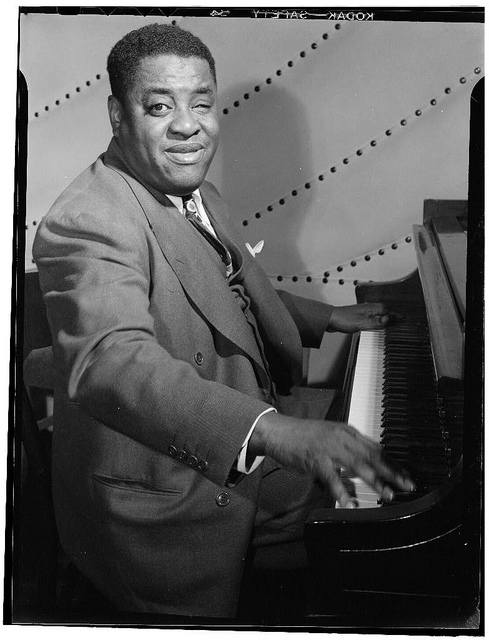
- Art Tatum is an example of facility in music. He executed lightning-fast runs with dexterity, touch, harmonic complexity, and rhythmic innovation.
- Magnus Carlsen (1990-) won several championships in high-speed or "blitz" chess. This form of chess requires players to perform complex strategic calculations in seconds; many grandmasters would take much longer to execute the same moves and strategies.
- Tom Brady (1977-) led his team, as quarterback, to seven Super Bowl championships. Though not gifted with extraordinary physical attributes, Brady demonstrated an uncanny ability to read the field in a second or two, and direct his team’s play to successful outcomes.
Technical and Analytical Readings
Photographs
Documentary and Educational Films
Imaginary
Fictional Narratives
Poetry
Music: Composers, artists, and major works
Felix Mendelssohn, Piano Concerto No. 1 in G Minor, Op. 25, MWV 07 (1831) (approx. 18-20’) (list of recorded performances), exhibits varying moods and tempos, including lightning-fast runs on the piano. “Apart from being full of agreeable melodies and brilliant passage-work, the Concerto exhibits Mendelssohn's near-obsession with the problem of making the separate movements of symphonies and concertos belong together in a seamless whole.” Top recorded performances are by Joyce (Fistoulari) in 1947, Lympany (Kubelik) in 1948, Rudolf Serkin (Ormandy) in 1959, Perahia (Marriner) in 1975, Thibaudet (Blomstedt) in 2001 ***, Wang (Masur) in 2009, Lisiecki in 2019, and Vogt in 2021.
Mendelssohn, Piano Concerto No. 2 in D Minor, Op. 40, MWV 011 (1837) (approx. 21’) (list of recorded performances), is similar to Concerto No. 1, though less widely acclaimed. Excellent performances are by Thibaudet (Blomstedt) in 2001, Schnyder (Boyd) in 2013, Lisiecki in 2019, Brautigam (Willens) in 2019, and Vogt in 2021.
Jazz pianist Art Tatum played with “an incredibly fast playing style, without losing accuracy.” He called this his stride technique. “'Tatum's playing was unworldly, unreal, because his standard was so high,' says Dick Hyman, a Florida-based pianist and composer who is considered a great performer of early piano jazz.” He was the subject of this documentary on his art. His playlists are extensive.
In a similar vein, jazz pianist Bud Powell played with “a lightning fast right hand”. He “was admired by his contemporaries as an adventurous original with a style marked by unrivaled virtuosity. Today, he is remembered for redrawing the course of modern jazz piano by pioneering bebop improvisation at the keyboard.” Tatum’s influence on Powell is obvious, as their styles and skill levels are remarkably similar. Powell too left an extensive set of playlists.
A young classical pianist, Lindsay Garritson, plays with breathtaking facility. She has competed in the Cliburn competition (preliminary recital 1 and preliminary recital 2, performed Prokofiev’s, Piano Concerto No. 2 in G minor and given this performance in 2014.
Fabio Biondi and his Europa Galante ensemble have an exceptional flair for Vivaldi’s music:
- Concerti con molti strumenti (138’)
- Viola d’amore Concertos (77’)
- Mandolin concertos (67’)
- 6 violin concertos, “La Boemia” (69’)
Albums:
- Alexander Hawkins, “Iron into Wind” (2019) (57’): “The development or evolution of Hawkins’ musical ideas is frequently heard . . .” [Don Lerman, Cadence magazine 2019 annual edition, p. 264.]
- Yuki Negishi, “Enigma” (2022) (64’) displays “Negishi’s fast, well-oiled and supremely confident fingers.”
- Carlo Vistoli, “Vivaldi, Sacro furore . . .” (2024) (68’): countertenor Vistoli's execution of vocal runs is especially impressive.
Compositions:
- Christopher Wright, Horn Concerto, “After the Silence” (2011) (approx. 20’): “. . . the hornist (shoots) straight out of the gate, as it were, with dramatic flourishes, quick tonguing, tricky licks, and passages rocketing up to the F horn’s written high C.”